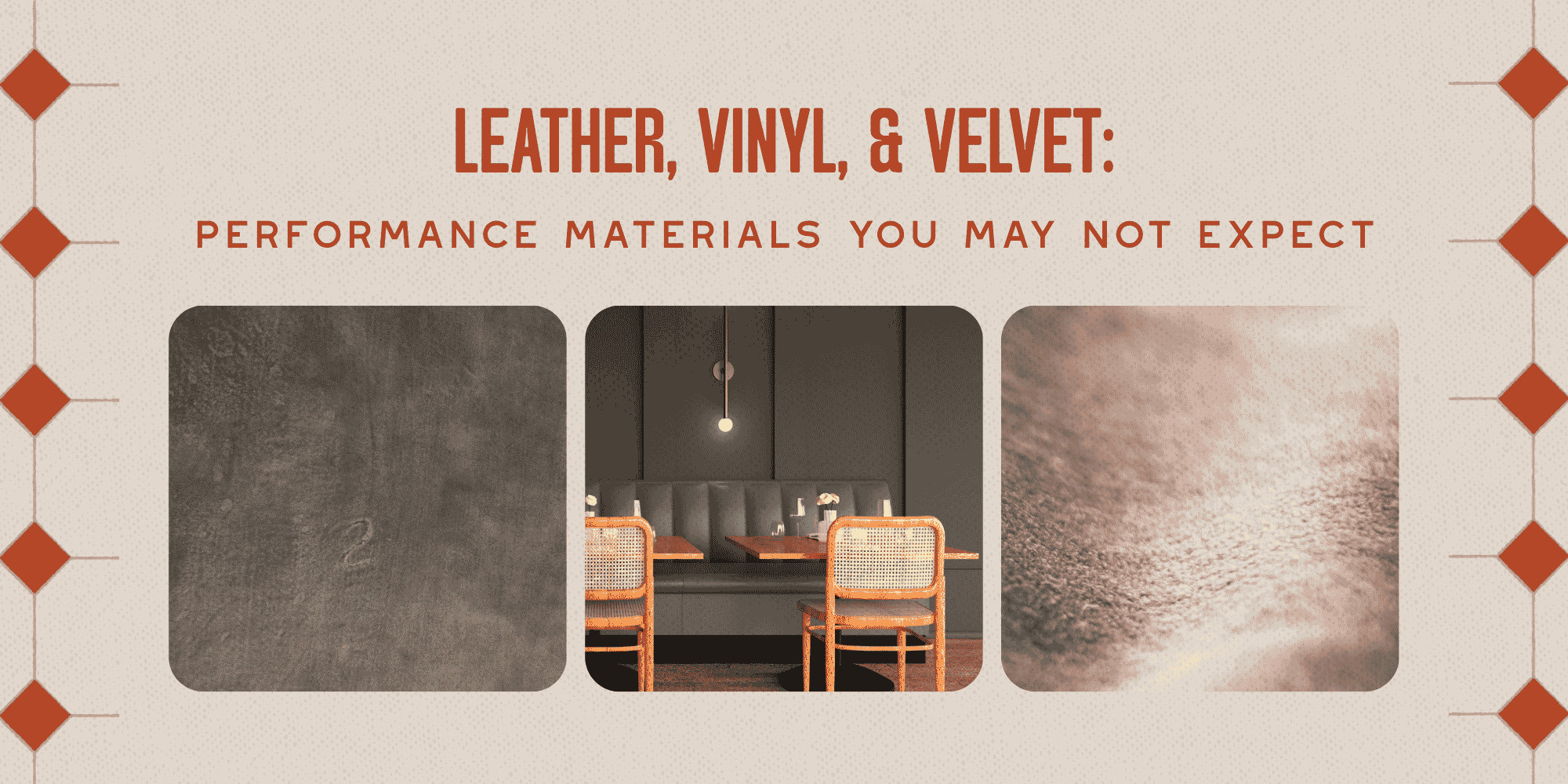
Leather, Vinyl & Velvet: Performance Materials Worth a Second Look
When customers ask for a fabric that can stand up to real life, many upholsterers and designers immediately think of performance wovens. But some of the hardest-working materials in upholstery are often overlooked entirely: leather, vinyl, and even velvet.
At Greenhouse Fabrics, these categories are more than specialty offerings. They’re practical, design-forward solutions that help professionals solve problems, expand project possibilities, and deliver long-lasting value to their customers.
From busy family rooms and hospitality seating to automotive interiors and statement accent pieces, these materials bring durability, cleanability, and elevated style together in ways many customers don’t expect.

Why Leather Still Leads in Upholstery
Leather has remained a trusted upholstery material for generations because it performs beautifully over time. Genuine leather develops character with age, resists wear in high-use environments, and offers a level of depth and authenticity that’s difficult to replicate.
Greenhouse Fabrics offers a wide range of leather options, including:
- Full grain leather for natural character and premium durability
- Corrected grain leather for a more uniform, stain-resistant appearance
- Aniline and semi-aniline finishes for softness and depth of color
- Distressed leathers for aged, lived-in appeal
For designers, leather offers flexibility across aesthetics — from tailored modern spaces to rustic or heritage-inspired interiors. For upholsterers, it creates opportunities to position projects as long-term investments rather than temporary updates.
There’s also a strong sales advantage in helping customers understand the value behind leather. High-quality hides are naturally durable, easy to maintain with proper care, and often improve visually over time through the development of a patina.
As customer needs continue to evolve, so do the materials available to meet them. This August, Greenhouse Fabrics will introduce a waterproof leather that combines innovation with the authenticity and character of genuine leather, offering even greater flexibility for residential, hospitality, and commercial applications.

Giovanni's Upholstery
Gilbert, AZ


What Makes Upholstery Leather Different?
- Leather is sold by the square foot. Unlike woven fabrics, which are typically sold by the yard, upholstery leather is priced and ordered based on the square footage of each hide.
- Every hide is unique. Natural variations in grain, texture, and markings are part of what gives genuine leather its character and authenticity.
- Hide sizes vary. Because leather is a natural product, individual hides differ in size, which can impact material calculations and project planning.
- Planning matters. Estimating leather requirements differs from estimating yardage for fabric, making it important to account for furniture style, seam placement, and hide yield.
- Expert guidance is available. Greenhouse Fabrics helps customers navigate leather specifications, yardage conversions, and hide selection to ensure confidence throughout the ordering process.

Vinyl Has Changed — and Customers Are Noticing
Vinyl today is not the vinyl many customers remember from years ago.
Modern upholstery vinyls are softer, more sophisticated, and engineered for demanding environments. Greenhouse Fabrics’ vinyl collections are contract-grade and designed specifically for high traffic, including options suitable for residential, hospitality, marine, automotive, healthcare, and commercial applications.
Greenhouse Fabrics notes abrasion ratings as high as 1,500,000 double rubs on select vinyl collections.


That performance matters in everyday spaces:
- Restaurant banquettes
- Kitchen seating
- Medical and wellness environments
- Family rooms with pets and children
- RV, marine, and automotive interiors
- Commercial waiting areas
Collections such as F60 and V02 are great places to start when selecting vinyl through Greenhouse.

Vinyl also solves one of the most common customer concerns: maintenance.
Because vinyl has a protective surface layer, it is one of the easiest upholstery materials to clean. Many options are bleach-cleanable and suitable for sanitizing protocols in healthcare and hospitality settings.
Greenhouse Fabrics also highlights an important shift in modern vinyl manufacturing: many newer offerings are free from PFAS, phthalates, antimicrobial additives, and added chemical flame retardants, with select options meeting additional environmental compliance standards.
For designers and upholsterers, vinyl creates an important sales opportunity. Customers can achieve the appearance of leather or suede while staying within tighter budgets. That makes vinyl especially valuable when durability, cleanability, and cost control all need to work together.
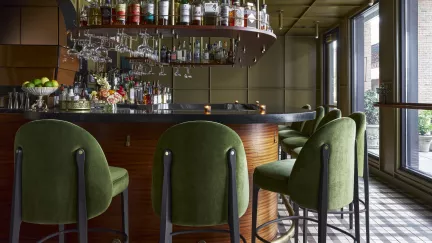
Velvet Belongs in the Performance Conversation, Too
Velvet is often viewed purely as a luxury fabric, but modern upholstery velvet has become one of the most practical high-style options available.
Performance velvets — especially those made with polyester, solution-dyed fibers, or tightly woven constructions — are increasingly specified for hospitality, family spaces, and high-use seating because of their resilience and cleanability.
One of velvet’s hidden strengths is its dense pile construction. Because the fibers are tightly packed together, many velvets naturally resist snagging, abrasion, and everyday wear better than customers expect. Performance velvet collections are also commonly engineered with stain-resistant finishes and durable backing systems designed for upholstery use.

Velvet additionally performs well visually over time. Unlike flatter woven fabrics that may show wear patterns more quickly, velvet’s texture and light reflection can help disguise minor marks, pressure lines, and everyday use.
For customers, velvet offers something unique in the performance category: softness and drama without sacrificing practicality.
For designers, that opens the door to:
- Rich layering and texture
- Elevated color saturation
- Sophisticated accent seating
- Luxurious hospitality environments
- Family-friendly spaces that still feel refined
And for upholsterers, velvet can help shift conversations from purely functional selections toward fabrics that balance beauty with durability.

Helping Customers Choose the Right Material
One of the biggest opportunities for upholsterers and interior designers is education.
Many customers simply don't realize that leather, vinyl, and velvet can be viable solutions for hardworking interiors. Once they understand the benefits, these materials often become some of the most practical and visually impactful choices in a space.
Leather brings longevity and natural character.
Vinyl offers exceptional cleanability and durability.
Velvet delivers softness, richness, and surprising performance.
The key is understanding which material best supports the way a space will be used. That's where product knowledge becomes one of the most valuable tools a designer or upholsterer can offer.
At Greenhouse Fabrics, we believe finding the right fabric should feel less complicated. Whether you're sourcing for a family room, restaurant, healthcare setting, RV, or commercial space, our team is here to help you navigate the options, answer questions, and uncover solutions that fit both the project and the customer behind it.
Ready to explore your options?
Request complimentary samples from our leather, vinyl, and velvet collections to experience the materials firsthand, or give our team a call at 866.755.5000 for personalized product recommendations and project support.