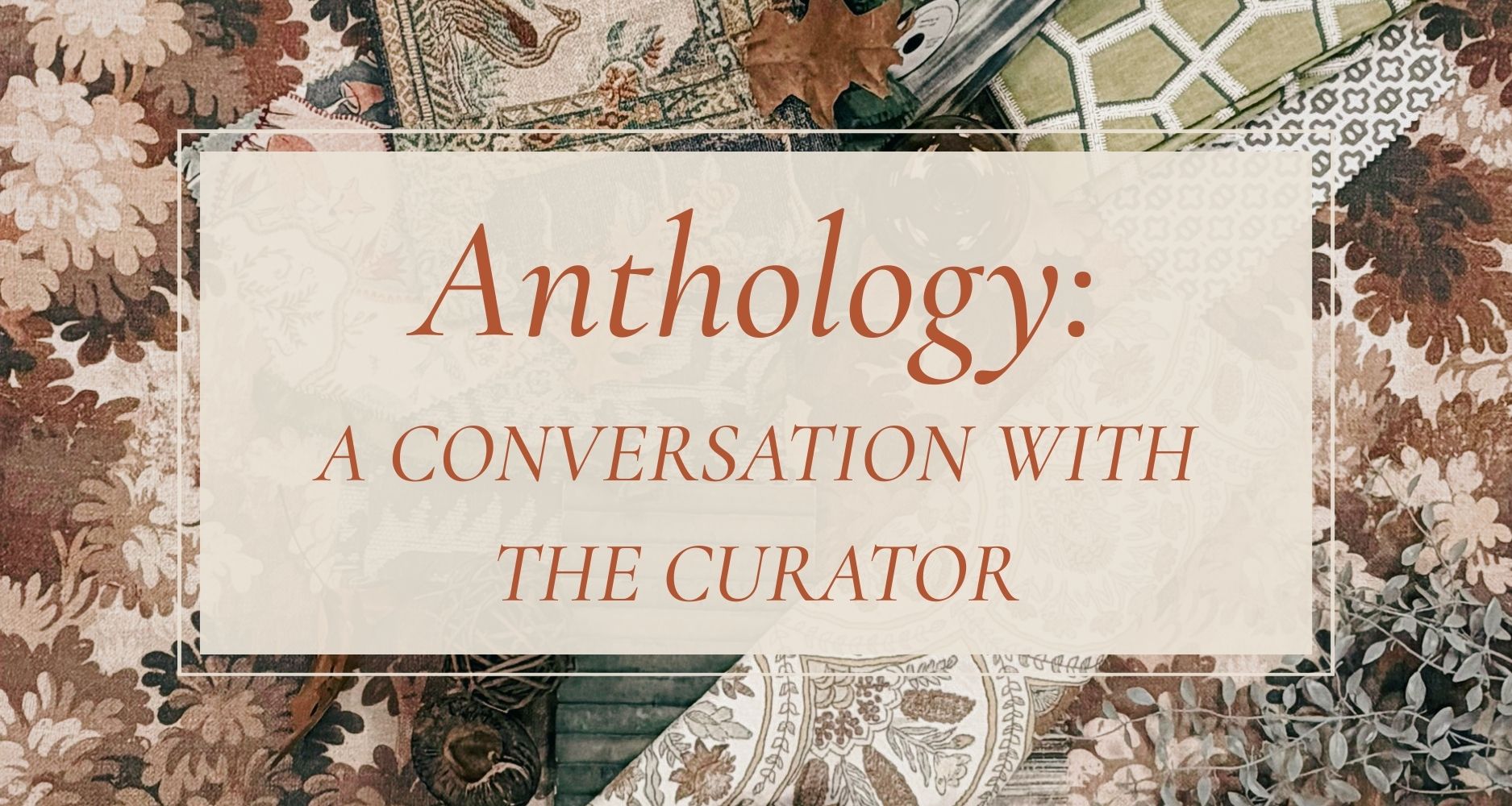
Anthology didn’t begin with a perfectly mapped-out vision.
It started with curiosity, instinct, and a willingness to let go of structure, embracing the process as it unfolded on its own terms.
We sat down with Brooke, the curator behind the collection, to talk about where the inspiration originated, how Anthology came together, and why this collection felt different.
What do you hope designers feel when they experience Anthology?
Curator:
I hope Joy and maybe a little relief from the façade of perfection.
Designers know this feeling — you start with a plan, and that plan goes to absolute s**t… and then suddenly things start coming together. Accidents become happy accidents. What you thought you wanted turns into something even better.
Anthology embraces that reality.
I think the biggest decision we made was throwing the rulebook out the window and leaning into the joy of the product we get to work with every day.

What does Anthology represent to you, personally?
Curator:
A life collected.
As a designer, it’s really about shedding the idea of perfection or completion. Moving away from always checking things off a list and leaning into the present instead.
Our work, our homes — they’re living, breathing things. They evolve.
And Anthology reminds me to let that be enough and enjoy.
When did Anthology really begin to take shape?
Curator:
Honestly, when we decided to let the fabrics speak to us.
We began by collecting — visiting suppliers, seeing their newest offerings, pulling designs that were still in progress off their boards. Some patterns didn’t even have fabric samples yet. Pattern S7820 was just a paper CAD with construction examples next to it from the mill.
Sometimes we’d just stop in front of one pattern and be like, “What is this?” Other times we were sneaking behind the scenes to see things that weren’t even fully developed yet. We were diving into color blankets, choosing what made us pause and just say, WOW.
And, yes, sometimes we were just standing there drooling and thinking: “we have to have this”. The abstract butterfly wing motif in Fiesta and Granite is a good example. It’s striking. It was a must have.

How was this different from your normal process?
Curator:
Typically, we start by referencing our own Top 500 product wall and do deep research into trends for color and design direction. We usually know what colors we’re targeting, what themes and Sample Book categories we’re building toward.
This time it felt organic. Like the fabric was leading the collection — not us.
We really broke our rules by throwing our normal process out the window and leaning into not having it make sense yet. There was no guide, no structure… just this gravitational pull toward patterns that felt unique.
Looking back, that’s when we realized it wasn’t about designing perfection. It was about collecting.
Did you have any colorways in mind from the beginning?
Curator:
No. Fabric led the palette here. Color was secondary. Normally we’d start by defining the color story, but Anthology just started separating itself naturally. We did end up organizing into colorways because some designers are very specific about the lanes they work in — and it helps narrow their process.
What surprised me most was the range.
You went from something bright like S7881 Mango, to sweet S7885 Blush, to something moody like S7864 Tweed… and somehow it all works. Even unique tones like S7844 Laurel started to feel like anchors. It wasn’t curated to match. It just started working together.
Another one is S7862 — the embroidered fox. It’s a one-color pattern, and we didn’t include it because it matched anything. It just was so compelling.
That was the fun of this collection. We weren’t forcing it to make sense. We were just enjoying the process.

What did the editing process look like?
Curator:
Honestly… a bit of a hot mess. A lot of walking — well, really pacing and rearranging. Taking everything in and revisiting the next day thinking…oof.
We didn’t test or try to match mood boards. We played. We moved fabrics around for weeks — probably 10 to 20 different iterations. Adding, subtracting, moving things again. Some days you walk in and think, what on earth are we doing?
Removing, or what we like to call culling, was actually the easiest part because it became a feeling. There were beautiful fabrics that got edited out simply because they belonged to another story.
Somewhere along the way, the collection started to take shape on its own.
Why was Anthology created as loose 9×9 memos?
Curator:
Because, it wasn’t meant to behave like a traditional book.
It doesn’t start with a color, or theme, or usage. It’s not meant to sit on a shelf for years. It’s about being in the moment — the project you’re working on right now.
I always recommend spreading everything out on the table. Let the fabrics pull you in. Let your client explore directly.
Sometimes, we don’t even know what we’re looking for until we see it.
And, sometimes the fabric you missed at first — the subtle one — ends up being exactly what you needed later.


Is there a piece that feels personal to you?
Curator:
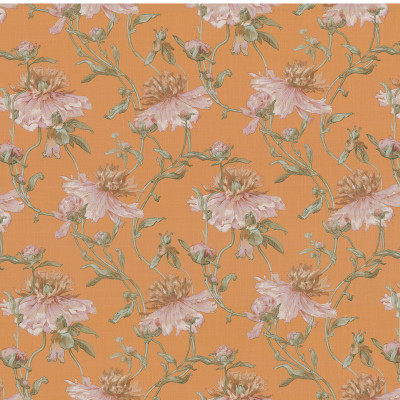
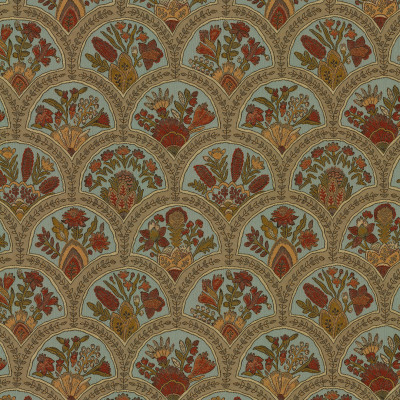
Yes — S7854. I’ve already pulled a memo for a personal project.
It’s sitting on a chair in my bedroom right now to see how I want it to take shape. I can’t explain it and it's not my normal style but I just love it.
That’s kind of the spirit of Anthology: you don’t always know where something goes yet — but you know you want to live with it.